Tuesday, 17 April 2018

The Guernsey Literary and Potato Peel Pie Society

Director: Mike Newell 3 stars

The small audience at the Everyman preview burst into applause at the end of the viewing and they showed their appreciation throughout with much laughter at all the right places. Aaah, there’s nothing like a cuddly rom-com to give you that feel-good experience. Reminder: Mike Newell directed Four Weddings and a Funeral.

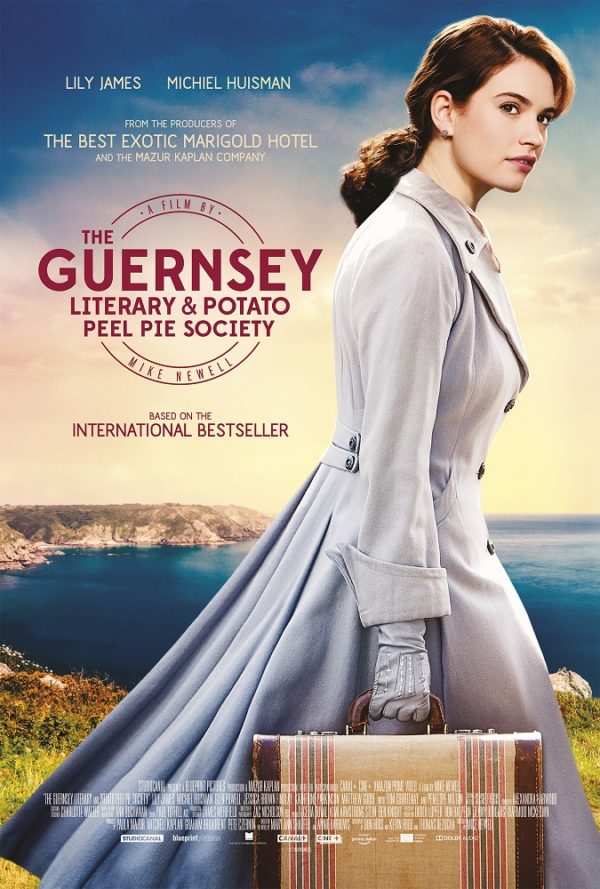
The Guernsey Literary and Potato Peel Pie Society.pngIt is 1946 and Juliet (Lily James) is an author who is contacted by a handsome Guernsey pig farmer Dawsey (Michiel Huisman) and decides to visit the island to interview its book group for a newspaper article. The group was a hastily invented ruse to fool the German occupiers but it has kept going after the war. Now Juliet finds that there is a mystery which she offers to solve with the help of her American GI boyfriend, Mark (Glen Powell).  So we get rom-com with the added bonus of a nice little detective story.

This is a film that will do well at the box office and we will see it offered innumerable times on TV. It will soon be available on Netflix. It is in the same genre as Their Finest, Darkest Hour, Swallows and Amazons, The Best Marigold Hotel, Harry Potter and Call the Midwife. It’s about that imaginary time when things were apparently simpler and people had hearts of gold beneath their gruff exteriors or else were properly evil. In this case there are the horrid Germans and the one Good German, the stoical Islanders, a token American who is nothing like as brilliantly fascinating as he thinks he is, a cuddly old geezer (Tom Courtenay) and an isn’t-she-comical hippy-dippy character who brews and drinks her own gin. Children are sweet and docile.

In the real life Channel Islands it is still difficult to talk about the German occupation. There is shame, guilt and painful confusion, not just about the occupation itself but about the way the aftermath was handled because sometimes this was done without understanding, compassion or mercy.  In real life it is obvious now that there were complex reasons why women had liaisons with German soldiers and why both men and women were collaborators.  In real life, children whose mothers disappear are traumatized and act out, they don’t smile politely, as in this film, for all the world as though nothing terrible has happened.  
In the universe portrayed by so many rom-coms there are no taxing moral dilemmas or deep hurts and no shades of grey in human behaviour. It would be a simpler world if you believed in the rules of rom-coms, for instance as here, that the boyfriend with the smaller eyes is always the one you should avoid. And that you are well rid of a man who makes off with the champagne after you have rejected him – clearly he was always a rotter.

As the film ploughed on, its superficiality began to irritate me and I started to notice the details that felt wrong. How did Juliet get all those hand knitted sweaters into her one suitcase? Where did her typewriter come from?  Why were British people from 1946 using present day Americanisms where children are ‘raised’, phones are ‘picked up’ and people say ‘right now’ instead of ‘at the moment’? Where did Juliet get her eyeliner and brown eyeshadow as I don’t think they had it in 1946? How come her American boyfriend was able to commission a US warplane to make his romantic dash to Guernsey? Did he steal it?

Can you, all in one film, successfully combine historical narrative with a gripping detective story with romantic drama?  I guess you can’t and for me this film doesn’t.

Never mind. The costumes are terrifically authentic (Charlotte Walter) and congratulations to the finder of such splendid interiors along with the production designer (James Merifield).  They have all done a fine job along with the distinguished cast, especially Penelope Wilton.  However, if you go hoping to see a lot of picturesque Guernsey landscape prepare to be disappointed as I have a suspicion that most of it was shot elsewhere.

The actual highlight of the evening for me was in the ads, a process that I normally avoid by arriving late. The new Lloyds Bank ad, The Running of the Horses 
https://www.youtube.com/watch?v=079qcLQkq1M is a stunning piece of art, directed by Sam Pilling. That sixty seconds lives on in my mind as conveying some kind of emotional truth, unlike the 124 minutes of the feature film itself which I will most likely have forgotten by the end of next week.


Tuesday, 10 April 2018

Another tired horror movie

Jenny gives Soderbergh's Unsane an excoriating 2 stars

Image result

Back in the old days when I was at the BBC learning how to be a filmmaker, my department had a higher than usual percentage of women directors. We often amused each other by betting on how long it was on a shoot before the cameraman would comment that it was all very well having young women directors (clearly it wasn’t really and it was all a bit of a puzzle to them how on earth we had got to this giddy state of authority) but you could NEVER EVER have women cameramen (sic) could you? 

The reason was always the same. ‘A woman could never carry the camera up a 15-storey tower block where the lift had broken down, now could she? (Triumphant grin). True, the camera was heavy and it had to have its own butler in attendance, an assistant, male of course, who carried the spare magazines and the toolkit of screwdrivers and other bits of essential repair kit which  it needed a man to understand.

How bizarrely quaint that seems now when Steven Soderbergh has made an entire feature film on a camera which he can tuck into his breast pocket and where a screwdriver is unlikely to be helpful if it should suffer some kind of malfunction. 

It’s not the first time the iPhone 7 has been used this way but never so wholeheartedly or with such unabashed delight. See! You can do a sort of day-for-night on an iPhone! Look! You can do wide angle! Whether you like the resulting soft focus, flattened depth of field, lost details of people’s faces and heavily saturated colour is another matter, but hey! It’s 2018! Tech rules!

The film itself? I’m sure they must have had jolly good fun making it in about five minutes and on no budget, especially Claire Foy, released from her regal rictus as the Queen in two series of The Crown to become a sweary young American analyst terrified of a stalker (Joshua Leonard) and there is a nice little cameo part from Matt Damon as a security specialist.

The name of Claire Foy’s character puzzled me: surely no one is going to be called Soya Valentini  even if they happen to have a vegan mother? But no, it’s Sawyer and possibly this is Soderbergh’s first joke of many.  Casually making an appointment at a counselling facility in her lunch hour, Sawyer suddenly finds herself incarcerated first for a day and then for a week on the grounds that her protests are merely denial of her suicidal state and that her physical struggles - she a tiny, slim woman - with the tall, massively fat staff, are pure evidence that she is a danger to herself and others. Of course, as another inmate, Nate, (Jay Pharoah) comments sarcastically, it’s all an insurance scam. So far, so Cuckoo’s Nest; please come in Nurse Ratched and turn up the Gaslight. Is she or isn’t she crazy? Possibly there is an answer but the film is so full of yawning plot holes it’s impossible to be sure what we are meant to conclude.

In the end it all turns into yet another tired horror movie where helpless women are propositioned by their bosses, stalked, tricked, tortured, locked with an attacker into rooms that are supposedly safe, thrown into body bags, abducted, strangled, stabbed, murdered and buried in woods. It reminded me of nothing so much as the black and white B-movies that I adored and adored to mock as a teenager. Same cheap, notional sets, sketchy characters, wooden dialogue and pantomime villains. Maybe as a kid Soderbergh liked them too.

Perhaps this film was made before Weinstein and #MeToo? The agenda has changed and it’s changed for good but of course it takes Hollywood and maybe men in Hollywood an awful long time to catch up, as we have seen. This stuff looks as old fashioned in its views of women as those held by my cameramen buddies back in the seventies and no amount of crowing about the wonders of iPhones could disguise this for me.  

Wednesday, 28 February 2018

Mother & daughter shine in Lady Bird


Joe gives Greta Gerwig's directorial debut 4 stars


Lady Bird is a slight but admirably delicate film. That it allowed me time to reflect while I watched it suggests that I was less than fully engaged. On the other hand, my reflections were all in its favour. It occurred to me that films about teenagers breaking free from parental restraints are not often so even-handedly compassionate, and convent schools are rarely allowed to appear so benign.

Image result for greta gerwig pictureThough she has a track record of directorial collaborations, this is the first film Greta Gerwig has directed by herself. And it’s a film in which a Gerwig-like role, somewhat reminiscent of Frances in Frances Ha, for example, is played by a younger actor, Saoirse Ronan. I was reminded of another comic auteur, Woody Allen, and it strikes me that the comparison is entirely in Gerwig’s favour. 

Though there are lines in this film that made me laugh out loud (which for some reason I don't often do in the cinema), emotional truth is never sacrificed for a gag. And whereas Allen clung on as juvenile lead for too long and later managed to induce talented actors, such as John Cusack and Kenneth Branagh, to become Allen-impersonators so that he could go on haunting his own films, Gerwig has allowed Ronan to make this part very much her own.


Related image
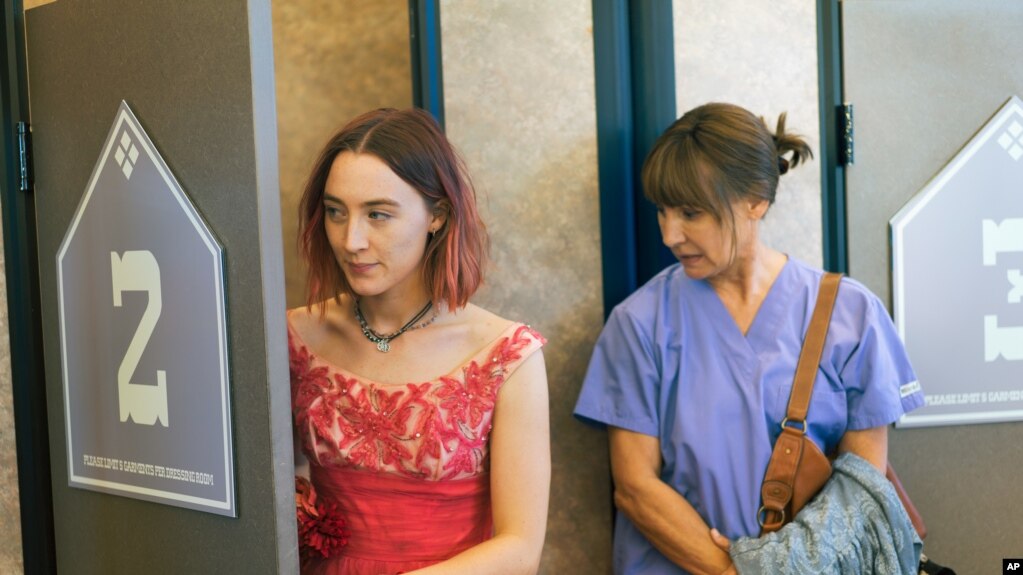
The heart of the story is the relationship between Christine McPherson (Ronan), who wishes to be known as Lady Bird, and her mother Marion (Laurie Metcalf) who veers between tolerating and resisting her daughter’s whimsical posturing. Christine’s father Larry (Tracy Letts) is warm and emotionally present but struggles to provide for the family and has settled into a more passive role. It’s left to Marion to do the worrying and to berate her daughter when she seems to fall short of her potential. As a mother, Marion has obvious faults. Building self-esteem is not a priority. In one stand-off she asks Christine, in exasperation, if she has any idea how much it costs to keep her. Christine picks up a pen and file pad and demands to know exactly how much, challenging her mother to put a figure on it, so that she’ll later be able to write her a cheque after which they won’t have to see each other ever again. Marion’s response, that Christine will never be able to earn that kind of money, is a characteristic put-down.

Image result for laurie metcalf in lady bird imagesBut the mutual frustration expressed at such moments is the flip side of a powerful bond. The scene in which Marion helps Christine buy a dress from a charity shop for the school prom is moving because it’s multi-layered. Alongside her mother’s clumsiness, we see Christine’s emotional dependence, her openness to advice, for all her stubbornness, and the extent to which her quirky style is an accommodation with the financial reality. Both these parts are wonderfully acted.

The plot, such as it is, concerns Christine’s ambition to leave California and take the more expensive and academically challenging option of a college in New York, a city she has never visited. Meanwhile she must navigate the social complexities of high school life. Her relationships with boyfriends are only averagely disastrous and the mean girls only moderately mean. As for her teachers, I wish I had encountered nuns as gentle as these. And yet I experienced all this moderation as a positive quality, allowing space for the film to explore Christine’s real struggle, which is to find some distance from her mother without alienating her, and to shape a more stable sense of identity.

Sunday, 11 February 2018

Phantom Thread haunted by Hitchcock

Jenny finds Anderson's film frivolous but worth 4 stars 


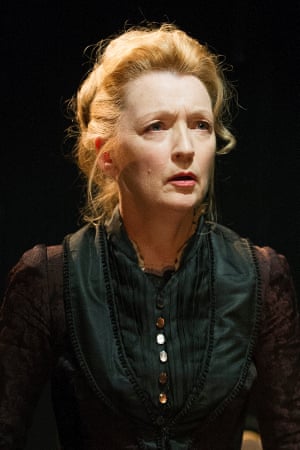
Paul Thomas Anderson's films have often been about struggles for control and their disastrous consequences, as in There Will Be Blood, or The Master. This one is no different except that the struggle is between the pettish, self-absorbed bully,  Reynolds Woodcock (Daniel Day-Lewis)  and Alma, the young waitress half his age (Vicky Krieps) whom he picks up when temporarily running away from his life in London and perhaps also from his fierce sister, Cyril, an absolute star turn from Lesley Manville.  It is the 1950s and Reynolds makes showy frocks for rich middle aged women who need to display their wealth at society balls. He secretly despises his clients unless they are young, beautiful and royal. He lives with his sister in his Mayfair atelier where there has been a long line of young women to service his sexual needs. When, inevitably, they bore or irritate him, Cyril coolly sacks them. 

Image resultThis first act is easily the best part of the film. Day-Lewis’s luminous, handsome face is matched by the unaffected smiles of Alma who seems simultaneously plain and beautiful.  Day-Lewis cleverly gives Reynolds a too-careful way of speaking, hinting perhaps at someone whose social origins are more lowly than he likes to admit. I was caught up in the plot here, underestimating Alma, wanting to shout, ‘Don’t do it! He’s far too old for you!’ thinking that we were in for yet another film where the appalling behaviour of a man to a woman is excused on the grounds of his supposed ‘genius’. I should have been warned. Early on in their relationship she tells him confidently that if he thinks he’s engaged in a staring match (he is) she can outstare him – and she does.

Now it gets complicated. Is this film one long secret comedy homage to Hitchcock’s Rebecca? Possibly. Alma was the name of Hitchcock’s wife. The character’s name, Reynolds Woodcock – a joke maybe and a play on Hitchcock? Early on we see Reynolds carefully clipping away nostril and ear hair: his grooming must of course be perfect and there was sniggering all round in the audience when I saw it. Then there is his ambiguous sexuality, where he drawls the claim that is he a ‘confirmed bachelor’, echoing Laurence Olivier’s Max de Winter whose is-he-isn’t-he sexuality was lightly disguised in 1940 along with Hitch getting away with what now seem blatant references to the lesbianism of Mrs Danvers. Lesley Manville as Cyril - note, no effort made to feminize her name - is a shoe-in for Judith Anderson in Hitchcock’s film, same hairstyle, same dress, same scary frown.

Image result for Lesley Manville picture
There is the same obsession with clothing and underwear and the same Gothic melodrama. The film also has echoes of Joseph Losey’s gripping 1963 classic The Servant where master and servant inexorably swop roles and in fact Day Lewis’s Woodcock has more than a passing resemblance to James Fox’s Tony.

This film is about co-dependence; it’s about male frailty and the inability of this particular man to love and be loved unless dominated.

It is about the malign influence of a controlling mother. Alma may be young, she may be ‘foreign’ (never explained, though Vicky Krieps is from Luxembourg) but she is definitely in charge.

Image result for Judith Anderson picture
The film is glossy, as pernickety in its framing and beautiful close-ups as is its protagonist. Exterior shots are few and far between; instead you get a real sense of the narrowness of the Mayfair townhouse as the staff clop their way up the stone stairs along with the stifling snobbery of that world.

The performances are excellent, the music subtle. If this really is Day Lewis’s final performance, as he has claimed, then he will be a loss: no film actor currently working is as subtle or can convey so much in a single glance.

But in the end, I didn’t care about any of the characters; they all seemed equally preposterous. The claustrophobic silence and sticky atmosphere of the atelier, the hideousness of the dresses and the delusions of the women who wore them, the pointlessness of Reynolds Woodcocks’s work, the silliness of an ending which involves poisonous mushrooms – it all made me feel that the film itself was pointless and silly: too long, a little dull - and not a patch on the masterly melodrama of Rebecca or The Servant.

Wednesday, 31 January 2018

Brilliant prosthetics can't rescue Darkest Hour

3 stars for Joe Wright's stagy portrait of the great man


No subject is as much written about in organizational psychology as leadership. There are millions of words and thousands of books on it. So there’s Contingent Leadership, Situational Leadership, Accidental Leadership, Leader as Coach, Distributed Leadership – and hundreds more. The one type of leadership no one gives any time to now, except as an historical accident, is Great Man Leadership. The reason Great Man theory has fallen out of fashion is that it is so implausible: there are always innumerable people, men or women, great or otherwise, who contribute to decisions, many of which rely on luck and chance for determining whether it turns out to be the right decision or not. The film industry has yet to catch up with this. They are stuck on Great Men, perhaps because one man winning against enormous odds tends to make for a better story - and that’s the theme of Darkest Hour, set in May 1940 with the British Army stuck in Northern France and defeat by the Germans a real possibility.

There was a much better film lurking here, perhaps in its early stages of gestation. This might have been Churchill as a self-doubting show off, a performer, a bit of a bully, a little silly and childlike, with a dodgy political record, unwell and not popular with his party, yet far sighted enough to see what the right moral and military path would be. You can see the faint threads of this idea in the scene where Churchill (Gary Oldman) goes to his hat stand and asks it which hat he should wear that day, or the one where a cynical fellow politician from his own side points out how much Churchill likes the sound of his own voice. This version of the film would also have shown that in the terrifying circumstances of the time there was a real case for trying to make peace with the Germans.

Image resultThis would have been a more restrained and subtle film with a lot less ‘acting’. The acting style is National Theatre Shouty – in fact the whole thing is very stagy. I can imagine it being performed at the Olivier Theatre: the revolve with the picturesque sets (War Room, Clemmie’s boudoir, Cabinet Room, Buckingham Palace) and the audience playing the MPs in the House of Commons. And watching the film I had the feeling I’d seen it all before: all those other very good Churchill impersonations, all those other darkest hours.

Yet the film does not trust the audience to understand the background, so there’s far too much filmsplaining where people tell each other things they already know, eg ‘Lord Halifax, the Foreign Minister’ or ‘People didn’t like the fact that Churchill was on the wrong side during the Abdication’ and of course the Map Room, the maps with pins in to ‘explain’ Dunkirk. As ever, there are too-old-for-their-jobs generals who are clueless about what to do because it is the Great Man’s role to solve the military problem.

The screenplay constantly wants to boost the drama and its nadir is a laughable scene where it takes a Tube train six minutes to go one stop to Westminster (in real life this would take about a minute) and Winston, an aristo who has never used a bus or a Tube in his life, conducts an anachronistic focus group, with a careful selection of brave Londoners, on whether to surrender or not. Naturally they all chorus ‘Never!’

Oldman’s prosthetics are brilliantly convincing, though I wonder if the real life alcoholic, overweight 65-year-old depressive would actually have bounded upstairs and along corridors as he does in the film. There’s also a daft scene with the King where, apropos of nothing, the King asks Churchill how he got on with his parents. Oh dear, these chaps never talked about their parents except in stiff upper lip code.

I find Joe Wright a very mannered director. As soon as I start thinking ‘wonder what kind of track they laid for that shot?’ or ‘why did he chose a zoom there?’ I’m lost and there’s a lot of that. Christopher Nolan’s Dunkirk seems to me to be a far superior film, covering almost exactly the same days, with very moving, straightforward directing, all the better for eschewing heroics and with a lot more dramatic tension, even though, as here, we already know the outcome. 

All the fringe things are terrific: production design spot on, make up authentic, costume ditto, supporting cast excellent, especially Ronald Pickup as the cancer-stricken Neville Chamberlain. The cinematography has a smoky look which feels absolutely right. But if the screenplay feels wrong, nothing can retrieve a film for me. 

Friday, 24 November 2017

Film Stars Don’t Die in Liverpool (but some films do)

Paul McGuigan’s film is based on a memoir of the same name by Peter Turner, an actor and writer from Liverpool, about his romance with the nineteen fifties movie star Gloria Grahame (Annette Bening). In the 1970s, Gloria was in her fifties, Peter (Jamie Bell) in his twenties. Her career is over but she is trying to revive it with theatre performances. Already ill, in 1981 she collapses in a Lancaster hotel and turns to Peter and his family for help.

For me this film bears all the marks of a phoney confection. How do you cover up the deficiencies of an inauthentic script? Focus on production design and wardrobe, in this case execrable wallpaper, nasty net curtains and horrible furniture to recreate the Turner household in Liverpool, plus hideous orange and brown clothing for the working class characters. 

Then the location: it’s going to be something overstated. It must have taken a scout a long time to find such dreary alleyways and streets, dimly lit of course. 

To pad out the film’s flimsy substance, there has to be a sub plot, here a comedy hearts-of-gold Liverpool Mammie played by Julie Walters with Kenneth Cranham, her silent husband, given nothing much to do but some unconvincing DIY business with a circuit board.

The biggest give-away of all is the simplistic characterisation.  There have been some touching, funny and intelligent films about what happens to famous actors, real life and fictional, as they age. The preoccupation with talent, good looks and fitness that blessed their heyday becomes a curse as they get older. These films range from Billy Wilder’s Sunset Boulevard to Alejandro González Iñárritu’s Birdman, with a star turn from Michael Keaton as an absurd and hilarious Superman-figure desperate to reinvent himself. I also enjoyed the gaudy chutzpah of Behind the Candelabra, Steven Soderbergh’s film about the last ten years of Liberace’s life.

In the kind of memoir which is the basis of Film Stars Don’t Die in Liverpool, the writer wants to elevate their own significance in the relationship, but the chances are that the star was of far more importance in the writer’s life than the writer was in the star’s. When turned into a film the result looks slight. For another example, see the similarly unimpressive My Week With Marilyn.

Phoniness becomes a particular risk when the film is a biopic. Here it is rare for a film to deal honestly with its subject: complexity is sacrificed for hagiography or else savage satire, exaggeration and melodrama. 

Image result for pictures of gloria grahame
The real Gloria Grahame did indeed refuse some treatment for breast cancer but she also had a great deal of plastic surgery, became obsessed by her thin upper lip which she padded with cotton wool, evidently a complication in scenes involving kissing where the co-star ended up with a mouthful of cotton wool too. 

Her fourth husband was also her stepson, a relationship that reportedly began when he was only thirteen. She battled her third husband for custody of their daughter. She had a breakdown and was treated with ECT.

All of this is a far cry from the bland, cutie-pie character that Anette Bening does her very talented and honest best to convey. As a result the film descends into schmaltz. The last twenty minutes is excruciatingly drawn out with the loveably eccentric Liverpool family in full cry and a ridiculous scene where Bening and Bell play out dialogue from Romeo and Juliet on the stage of an empty theatre. Oh please, let the woman die!

There is one scene which shows what the film might have been. The naïve Peter makes his first visit to LA. Over dinner at Gloria’s home, where her aim is to show off her handsome young lover to her mother (Vanessa Redgrave) and spiteful sister (Frances Barber), he learns something of what may lie behind the glamorous front. Here, the dialogue and acting are sharp, surprising and funny, but alas this was the only scene which woke me from torpor as the film sluggishly wound its way to its entirely predictable conclusion.


Monday, 13 November 2017

Well-meant but misleading

Jenny hardens her heart with only 2 stars for Breathe

I met my friend Bob at university. He had been unlucky enough to get polio as a child – the tail end of the epidemic just before universal vaccination banished this horrible illness in the UK. He was in a wheelchair. His way of managing the reactions of those around him was to refer to himself sardonically as Brave Bob. ‘Oh yes’, he’d say, ‘Brave Bob still has a working brain’, and woe betide anyone who patronized, asked intrusive questions, for instance about sex, what worked and what didn’t, or made comments intended to be tremendously encouraging about how amazing it was that he could manoeuvre his wheelchair in and out of lecture theatres. Bob already saw the attraction of the Supercrip to the world of able bodied people.
Image resultBreathe unfortunately follows the familiar Supercrip stereotype that we see in films about disability. The film, which is directed by Andy Serkis, is based on the real life of Robin Cavendish (Andrew Garfield) and his wife Diana (Claire Foy). Robin contracts polio as a 28-year-old in Kenya, is permanently paralysed from the neck down, can only breathe thanks to a mechanical respirator and is given months to live. Diana springs him from hospital despite the dastardly opposition of his doctors and finds a friend, Teddy Hall (Hugh Bonneville) who can make him a wheelchair which includes the respirator. They entertain, they travel, Robin campaigns for disabled people and lives for another 36 years. Judging from his Wikipedia entry, the real life Robin was a thoroughly inspiring man see and this film is intended to commemorate his life and work, especially as the producer is his son Jonathan Cavendish.
The film will work for many people as a lovely weepie – I heard a lot of snivels from fellow audience members, but alas, I hardened my heart. Full disclosure: I lived with a severely disabled man until his death 7 years ago. He was in a wheelchair for the last five years of his life. He, too, mocked the Supercrip stereotype, refusing people’s pity. I promise you that living with disability is nothing like it is depicted in this film and I hated the way it fell into the easy stereotypes:

The disabled person is always a man.

The actor is slim, able-bodied and good looking. 

He uses a wheelchair because this is a visible symbol of disability that everyone can understand. 

The man is saintly, brave, uncomplaining and clever. 

The man needs the wisdom of a good woman to save him from a life of despair but she must sacrifice everything because her purpose in life is to serve him. 

The cost in money of disability must never be mentioned, for instance of equipment, adaptations to the home, special clothing, laundry, helpers. 

People who oppose the hero are creeps, jerks and bullies. 

The emotional costs to the rest of the family must never be mentioned. 

The disabled person ingeniously discovers ways of overcoming his physical handicaps through inventions usually involving string, bells, teeth and eye movements. 

Towards the end of the film the disabled person makes a rallying speech about prejudice. 

The disabled person must die in the film, often to prevent further exploitation of their loved ones.

Breathe falls into all of these clichés, with added heartswelling orchestral accompaniments in case we miss the point. The characters never age, except for some terrible prosthetics added to poor Andrew Garfield’s face for the film’s final sequences. A rosy glow permeates the gracious if slightly tatty home and its surrounding rural landscapes. Everyone smiles most of the time and Andrew Garfield does a lot of splendid acting with his eyebrows.

Diana appears to deal solo with Robin’s needs, but did she really? Did she manually evacuate his bowels and change the catheter? Did she dress him and feed him?  Did she do all the extra laundry? Did she, a slight woman, turn him, a heavy man, every few hours on her own and deal with the ugly threat of pressure sores every day? Did she service the respirator? Where did the money come from? How did she manage to do all of this and care for a small child? Did the child never resent the time and attention that his father necessarily absorbed?

No, I don’t think this would have been possible. There must be a good documentary to be made about the extraordinary life of Robin Cavendish which would salute his role in raising awareness and horizons for disabled people and which would not shy away from all the things most people really don’t want to know. We would all rather preserve our cosy fantasies, the most malign of which, perpetuated in every feature film as in this one, is that if disabled people try really really hard, they can overcome their handicaps.
This film is a touching tribute by a son to his father, but it is also a good argument for never being involved in a film where you are one of the real life characters.

My old friend Bob lived a distinguished life as an acerbic critic, writer and academic. His feisty wife, Marie, is nothing like the pastel-coloured character depicted by Claire Foy. In his way Bob was as much a pioneer as Robin Cavendish. You can read his Guardian obituary here

Wednesday, 8 November 2017

The Killing of a Sacred Deer

5 stars for Yorgos Lanthimos’s best film so far

As we left the cinema my companion asked me what I thought of the film. ‘Brilliant,’ I said. She stared at me with incomprehension. ‘How anyone can say that film is brilliant I do not know.’ Explaining, arguing or justifying was pointless on either side and we walked to our bus in virtual silence.
Image result for the killing of a sacred deer posterLanthimos divides people, he’s a Marmite director; there’s no middle way, you either think he is a genius or that he is an art-house poseur.

I thought this his best film to date. He has attracted a bigger budget, he has secured the loyalty and admiration of two distinguished actors, Colin Farrell and Nicole Kidman. The narrative here is fluid, confident and, as ever with a Lanthimos film, mystifying, with much left intriguingly unexplained.

To enjoy the full horror of apprehension, you need to know the meaning of the title. In Greek myth, the king Agamemnon accidentally kills a sacred deer. To placate Artemis, the goddess of hunting, and to spare his fleet from destruction, she demands that he sacrifice his daughter Iphegenia. When you know this tale you understand that you are going to be tortured by waiting to find out if the same story will play out here.

The film starts naturalistically with Dr Steven Murphy (Colin Farrell) and his wife Anna (Nicole Kidman) living in a handsome house with palatial rooms, each one pristine. He is a successful cardiac surgeon, she is a successful ophthalmologist. They have two beautiful children. What could possibly be wrong? The first sign that all is not well is that they play a sex game called General Anaesthetic. Next, Steven has an oddly intimate relationship with the teenaged Martin (Barry Keoghan). Martin has a gormless, unhealthy look to him but Steven is buying him expensive presents, meeting him often and inviting him back to the family home for no discernible reason. Then there is Colin Farrell’s appearance, much of his face, including his mouth, thickly hidden behind a dishevelled black beard and moustache.

Slowly we realize that Martin’s father has died on Dr Steven’s operating table. The infallible king of surgery, the ultra-successful man, has made a mistake but it is not one he can admit to. In fact his stated opinion is that if something goes wrong, it is always the anaesthetist’s fault. Later, his anaesthetist, in the grip of another kind of corruption, insists that it is always the other way around.

Soon we are into the surreal territory of earlier Lanthimos films. Buildings become prisons where there is no escape as horror, magic and warped logic descend. The man of science, the man in control, tries all the known remedies, desperately bullying colleagues for an answer to the bizarre sickness that strikes and could kill both his children and then his wife. But science can’t help because the family has been cursed and he is being punished for his sense of entitlement, his arrogance and lack of remorse, for being a heart surgeon who lacks heart. I was reminded here of George Bernard Shaw’s opinion in the preface to his play The Doctor’s Dilemma, that all professions are ‘conspiracies against the laity’, just as true now as it was in 1906.

Related image
Lanthimos has his own unique style but he seems to have been influenced by the work of two other directors: the icy command of Michael Haneke and the blending of gothic dream and mundane reality in the films of David Lynch. His subject matter, like theirs, is the deeply irrational nature of human thinking. He composes with geometric precision, often very long shots or using an extremely wide angle lens from a static or swooping camera, dwarfing the people. His camera is often slightly above or slightly below the actors’ eyelines, giving the film a voyeuristic quality and a feeling of unease about how far you can trust anything you are seeing.

Fine performances all round, clever use of classical music in the score, immaculate cinematography from Thimios Bakatakis, a mythical and brutal horror story deftly told that lives on in your mind: what’s not to like? 

Friday, 27 October 2017

It's absurd but are we meant to laugh?

Jenny finds it hard to enjoy The Death of Stalin

Is it a satire? Yes. Is it reasonably true to the real events? Apparently. Is it hilariously funny, like Iannucci’s previous offerings such as The Thick of It or Veep? Not really.

It’s 1953 and Stalin (Adrian McCloughlin) has had a stroke. He is alone. Although they hear him fall, his guards are too terrified to enter his room and when they do he is in a coma. His underlings are summoned and begin to manoeuvre, panic and bicker about who will succeed him. But meantime they have to haul him on to a bed, a task they find fussily distasteful since he is a heavy man, reeking of urine, and they are still uncertain whether he will live or die. They would send for medical help but unfortunately all the decent doctors have been killed or dispatched to the gulag, so a posse of trembling young and old fools is assembled in white coats only to pronounce that he cannot recover. And he cannot.

Simon Russell Beale is perfectly cast as the sinister Beria, head of the secret police; Steve Buscemi is the slyly scheming Kruschev and the wonderful Jeffrey Tambor plays Malenkov, Stalin’s fluttering deputy, with more than a touch of Maura, his transgender role in Transparent. The accents are an unapologetic jumble of New York, Californian, posh English, estuary English and Yorkshire. Thankfully, no one does fake Russian.

Iannucci is a specialist in puncturing the pretensions of petty men, fatuous tyrants who have squirmed, lied and terrorized their way into power. He skewers their frustrations as the world - objects, people and events - unaccountably fails to bend to their every whim despite their threats and their investment in spin and fake news. The comedy of his TV series, The Thick of It, arises from the surreal profanity of their language, their grandiosity, their outrageous bullying and the way the onscreen drama seems so often to predict real events. For instance, in the spin off film of the series, In The Loop, Tom Hollander plays a character who confesses to a liking for pornography. Shortly afterwards the real life British Home Secretary was discovered to have added the cost of a pornographic movie to her parliamentary expenses.  

There are some good sight gags. Tambor plays Malenkov as preening and dim-witted.  A string trails from the back of his ill- fitting but no doubt expensive jacket and this turns out to be attached to a corset. Jason Isaacs plays Zhukov, the swaggering head of the army, with an ostentatious facial scar and so many medals pinned to his already garish uniform that he clanks as he walks.

Related image

Unlike the japes imagined with such zest in Iannucci’s previous work, the action of this film is apparently closely based on history. All this chaos, paralysis and bizarre politicking actually happened in the wake of Stalin’s death. But Stalin’s regime was not funny. People really were murdered on a whim and in their millions. Political enemies really were disappeared. Beria really did rape and torture.

The excellent ensemble cast must have enjoyed making this film. Their exuberance shows. But truly it is more like tragedy masquerading as comedy. Its tone and purpose seem uncertain. We watch the contemptuous open air cremation of Beria’s body and Stalin’s autopsy is shown in gruesome detail. On the first day of the film’s release, almost every seat in the cinema was taken. It’s safe to assume that most of us thought we would see something laugh-out-loud funny. But I heard no yelps of laughter, just a few grunts from time to time. The film was mostly watched in silence. Perhaps the election of another vain and stupid man to the pinnacle of power in the US makes it harder to laugh at lunatic tyranny. Perhaps that’s why as the lights went up we filed out silently, with sober faces.

Monday, 16 October 2017

Don't miss this party

Jenny gives Sally Potter’s political farce 5 stars

The Party is a terrifically enjoyable film. It’s a chamber piece made in pin-sharp black and white, only 71 minutes long and is very very funny.

It opens with a close-up of a brass lion’s head door knocker. Behind it is Janet (Kristin Scott Thomas) eyes wild with emotion, brandishing a gun. It’s a flash forward; everything else in the film happens in real time.

Cut to Janet in her elegant kitchen in one of those tall thin North London houses with a cramped, sunless garden. Janet is a senior politician. The event is to celebrate the news that she is to become the Shadow Minister of Health for her Party and all her close friends are invited. She is giggling exuberantly, nursing her phone in her chin as she prepares the vol-au-vents. Immediately we are into surprises because Janet is obviously talking to a secret lover. Janet is also maybe channelling Margaret Thatcher and showing off a little with her pinny and housewifey insistence on doing the catering herself. Personally I thought vol-au-vents a little too obviously retro for a smart party involving the post Referendum London middle class in 2017, but that’s just a quibble. 


Meanwhile in the heavily book-lined sitting room her husband, Bill, (a gaunt Timothy Spall) a man who sacrificed his career for hers, sits motionless in what looks like a catatonic state. What’s happening to him? ‘I’m Bill’ he says lugubriously, ‘Or I think I used to be’.

Image result
The guests arrive. They include April (Patricia Clarkson) and her boyfriend Gottfried (Bruno Ganz). Bruno is not reprising his brilliant role as Hitler in Downfall as here Gottfried is some kind of life coach with a new agey cliché for every situation, though maybe there is a sly joke within a joke here when April says, ‘Tickle an aromatherapist and you find a fascist’. April has a smart put down for everyone, but it’s a put down of the stiletto type which you don’t feel until it has slid in because it starts as a compliment, such as her comment to Janet, ‘I’m so pleased about your success – but you really must do something about your hair…’ Then there is the bickering lesbian couple (Emily Mortimer and Helen Cherry) whose shock is that IVF has been successful and that they are expecting triplets. Not just triplets but, oh dear, boys.

Everyone has secrets, including Tom (Cillian Murphy), a banker, who arrives distraught, sweaty, in need of another line or two of cocaine – and with that gun. Everyone also has life-changing announcements. Infidelity, illness, pregnancy, the compromising of publically held political principles, the post-Brexit confusion, betrayal: it’s all here.

I loved this film not least for its homage to so many predecessors. It could be a one-act early Simon Gray or Tom Stoppard play. It could be Mike Leigh when he still had a sense of humour: there is more than a nod to Abigail’s Party with its absent but critical character, in this case Marianne, Tom’s wife. There is also superb use of a MacGuffin, the term popularised by Alfred Hitchcock to describe an object or an idea with which the characters become obsessed but whose only real point is to drive the plot forward.

The stellar cast must have had enormous fun making this movie. They are all wonderful but if I had to choose I would say that Patrician Clarkson - haughty blonde mane, dramatic lipstick, exquisite timing - wins it for me.

This film is satire, written as well as directed by Sally Potter, and it is sophisticated farce. I watched it in the BFI’s excellent pop up cinema on the Victoria Embankment during the London Film Festival. There is a final twist where the huge audience erupted with laughter and applause. We absolutely could not have guessed the ending. 

I have lived in one of those tall thin North London houses where the kitchen can never be on the right floor and where catering for a party was always a nightmare. I’m not surprised that the vol-au-vents got burnt and had to be thrown out. Really, darling, another time just get Deliveroo or UberEats, even if it’s not politically correct. No one will ever know.

Joe's footnote

Kristin Scott Thomas's performance as ex-convict Juliette Philippe in Claudel’s 2008 film I’ve Loved You So Long (Il y a longtemps que je t’aime) is superb. But she’s great whatever she’s in. I know some people consider Four Weddings and a Funeral to be the great onscreen love story of the 90s, but I could never believe that Charles, however shallow, would fall for the inadequately scripted Carrie, while KST's sharp-tongued, sardonic Fiona was pining for him. 

Tuesday, 6 June 2017

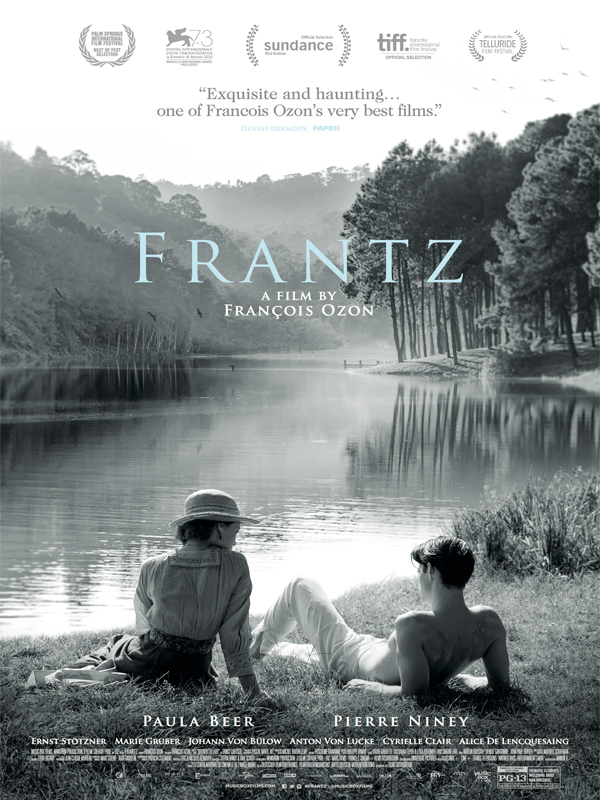
In Frantz it isn't only the hero's mustache that droops

One sniffy star is all Jenny thinks it's worth

My Persian cat is a fine sniffer-out of anything slightly ‘off’. He wrinkles his sweet but rather flat nose and I can see that a judgement is coming. My own nose was wrinkling as soon as Joe, my co-blogger pitched the idea of going to see François Ozon's Frantz. ‘This grieving German girl finds a strange young Frenchman standing at the grave of her dead soldier fiancé in 1919 and he gets to know her family.’ In a flash I correctly guessed two thirds of the allegedly Hitchcockian plot. I don’t like doing this. I don’t like watching bloopers, poor screenwriting and films that are too long because no one had the time to make them shorter. It destroys my willingness to believe that what I’m watching is not a film at all but something gripping and real.

Unfortunately there was so much of all of this in Frantz. First, it’s full of plot holes: how did Adrien (Pierre Niney), the French soldier track down the angry and bereft German family given the flimsy evidence he possessed? How did he know about Frantz’s pre war interests? Then there are all those little give-away details of a director too distracted to notice the give-away details: for instance, a supposedly full tureen of food is plonked on a table when the noise of the plonking shows clearly that it is empty. 

Then there is the scene where the hero impulsively swims in a lake, clad only in his longjohns; a stand-in might have done the swim with more elegant strokes instead of the undignified doggy paddle that we saw. After this, lounging sexily on the bank, his thick cotton underwear has seemingly dried out in seconds even though his body is still gleaming attractively with lake water. The whole scene would surely have been extremely unlikely in 1919. The extras have the awkward air of hastily recruited locals told to do a bit of walking up and down in the background. The editing seems perfunctory - so many unnecessary shots of people opening doors, coming in and out of rooms. At 20 minutes shorter it could have been a much better film.

Pierre Niney and Paula Beer in Frantz (2016)The actors do their best. Pierre Niney plays the French hero – his extraordinary nose and silly moustache deserved a credit all of their own. Paula Beer is elegant and more aristocratic than the part deserves as Anna, the bereaved fiancée.

But my real nose-twitching was about a director claiming to be an Auteur when maybe he is just a workaday storyteller. Can you make a serious film heavily freighted with symbolism and deep meaning if you are not driven by authentic passion for the subject? I don’t think so and I didn’t believe for a moment in the authentic passion. I saw a film where the director was in love with style, with his terribly sophisticated choice of colour-corrected black and white as the medium, with his cleverness in devising parallel scenes of nationalistic stupidity and prejudice, with little speeches about the futility of war. I didn’t want to see the train shots – on a journey, geddit? I was not gripped by the last two reels. These were some kind of low-energy detective story which seemed to belong in a different film. 

Slow, implausible, hastily stitched together. What’s to like?


Tuesday, 2 May 2017

Russian Gothic in the North of England

Jenny gives William Olroyd's Lady Macbeth five stars

No, it’s nothing to do with Shakespeare, just the title of a Russian story written by Nikolai Leskov in 1865 where the author wanted to find a suitable name for a woman who defies convention and carries through some increasingly terrible deeds.

Lady Macbeth (film).png
Katherine (Florence Pugh) is a teenage bride who has been part of a Buy One Get One Free deal between her impoverished family and the bullying mine owner who purchases her for his weak and dislikeable son. She is a virtual prisoner, forbidden to leave the house. So far, so familiar: we’ve seen the poor downtrodden girl before, we know what to expect from the wedding night, the windy walks on the moors with hair flying, and then the inevitable transgressive sex with the handsome dark-skinned groom (Cosmo Jarvis). Oh yes, we’ve seen Wuthering Heights. We know what happens to women like Madame Bovary and Becky Sharp. It’s almost enough to make you want to shout, ‘Don’t do it Katherine! Haven’t you read your Lady Chatterley?’

So the film is apparently a bodice ripper and bodices do get ripped. It’s set in the English North East so there are appropriately gritty accents. There’s period décor and costume. Many of the scenes are visually startling with one vivid colour, for instance Katherine’s bright turquoise dress, splashed into an otherwise monochrome frame.

But what’s this? The heroine wears a crinoline cage and is laced hard into corsets but she also wears Boots Number 7 eyeliner. There is an orange pet cat as restless as she, and it’s a Cornish Rex, a breed not invented until 1950. She gets drunk in a thoroughly 21st century teenager-y way, combining smirking insolence with a little light falling over. She eats like every modern teenager I know – that is to say by holding her cutlery in an extremely peculiar way. The film was shot on location at Lambton Castle in Wearside and I could swear that the paint is straight out of the Farrow and Ball catalogue, in fact it looks very like Mouse’s Back, the same exquisitely tasteful colour that our ex-prime minister has chosen for the quaint little old-but-new ‘shepherd’s hut’ where he will be pretending to write his memoirs.

Image result for Vilhelm HammershøiWilliam Oldroyd has spoken of getting inspiration from the Danish artist Vilhelm Hammershøi, who has often painted women facing away from the viewer, sometimes looking out of a window in an isolated landscape. The effect in the film (the production designer is Jacqueline Abrahams) is of empty stone stairways and tall rooms which have had all the air sucked out of them.

There are black and mixed race servants though no one makes the slightest comment on this; there is class prejudice and sexism; there is cruelty; there is sex; there is crime. But the director has not wasted what he learnt in his earlier career in opera where themes of Grand Guignol revenge can mix readily enough with farce. The moral corruption of the characters emerges gradually as you begin to realize that the plot displays all the conventions only to promptly upend them. This is no simpering heroine, but you will have to see the film to discover how and why. The director has borrowed from Haneke, Hardy, Andrea Arnold and most notably from Scandi Noir but has created a style that seems unique, fresh and possibly a little reckless. 

The screenplay, written by Alice Birch, has minimal dialogue and indeed one of the characters becomes mute during the course of the action. The cast are magnificent. There is almost no music. The sound designer, Ben Baird, deserves every possible award for the way he evokes the unsettling voice of the house: the austere squeak of shutters being opened, the clatter of feet on wooden floors, the scrape of knives on plates and the echo of words spoken in rooms stripped of comfort. Most amazingly of all, the film was shot in 24 days and made for under £500,000. This is the film equivalent of a fiver. Well done you guys, I look forward eagerly to your next project.


Tuesday, 25 April 2017

There are great films about ageing but this isn't one

Jenny is underwhelmed by The Sense of an Ending

Julian Barnes’ very short book left me underwhelmed in 2011, wondering why it had won the Booker prize, and Ritesh Batra's film of the book has left me even more so. What happens? Nothing much, though the little that does happen seems intended to be have tremendous meaning.

Image resultTony Webster (Jim Broadbent) is a prosperous ageing man who potters about repairing and selling vintage cameras. He has been a bystander in his own life where his short temper, charmless indifference to others and lack of emotional intelligence have probably lost him his marriage. His only daughter is about to give birth and he also risks losing connection with her. Then he gets a letter which sets him on a quest – to do what exactly? Discover himself? Find out what he has resolutely ignored for so many years? Get redemption? His former girlfriend Veronica (Charlotte Rampling, whose stare could freeze a thousand ex boyfriends) and his former wife (Harriet Walter) do their best to treat him with the impatience he deserves.

The film’s attempts at a final twist are undermined by its conformity to the late film critic Roger Ebert’s Rule of Economy of Characters. This is the one where an underdeveloped character who seems extraneous to the plot turns out to be essential to it, so any experienced movie-goer will guess the drifty non-ending long before it happens.

I don’t think we do films about ageing at all well in the UK. The films pass the time pleasantly enough and are then instantly forgettable. For instance, there’s cute-and-quirky (Best Marigold Hotel), embarrassing (Venus: Peter O’Toole getting over-personal with a young woman) sentimental (Quartet: old thesps do their thing), suppressed melodrama (45 Years) or just dull (Another Year).  Where casting is concerned, there seems to be a serious lack of imagination. The same small group of actors comes round again and again:

‘Shall we cast Bill this time so that he can do his full Nighy, or maybe give Tom W another go?’
‘Nah, let’s stick to good old Jim.’

Jim Broadbent does his best with the leading part here, though somehow he seems too twinkly and whimsical to be convincing as the curmudgeonly Tony. Now that a few days have passed, I find it hard to remember how this performance was all that different from what he did as Nick in Le Weekend, John in Iris, Father Flood in Brooklyn or Tom in Another Year.

It is possible to make enthralling films about older people without patronizing or stereotyping. Alexander Payne has done it at least twice with About Schmidt and Nebraska. Both these films also feature disastrously unaware and unlikeable ageing men and have you squirming with pity, fervently hoping that you don’t recognise yourself in their dilemmas - and smiling. Clint Eastwood did it in his gripping Gran Torino. Michael Haneke brought his merciless eye to Amour. Nor does such a film have to be either grim or sentimental: Iñárritu’s Birdman (Michael Keaton plays an ageing actor who is desperate to reprise his fame as a superhero) was to me one of the funniest films of 2014. 

The film industry has grasped that there are large numbers of baby-boomers who like cinema and who might enjoy seeing their own age group on screen. But producers need to do better than The Sense of an Ending. No one in the sparsely populated Islington Vue audience seemed to be under sixty but we all filed out silently with what looked to me like pretty doleful faces.


and Joe remembers the Booker Prize gossip  

I haven’t seen the film and can’t remember much about the book. But I do remember the apparent randomness of the Man Booker Prize judging process the year it won. First the short list put the cat among the pigeons by dissing a bunch of recognised heavyweight authors, who had published that year, in favour of unknowns and novices. Of the six authors on the list, only Julian Barnes had a track record.

This seemed bold and refreshing until the chair, a retired spy, and another of the judges, an MP, expressed their preferences for “readable” books that “zipped along” – arbitrary criteria, surely, for a literary prize. Cue howls of protest from those who felt that zippy readable books were already sufficiently rewarded by profitable book sales. 

Two separate kinds of objection – the principled one that the winner should be a book of serious literary merit, and the personal one that Marty, let’s say, or Ian or Salman shouldn’t be pushed out by some writer we’d never heard of – inevitably got muddled in the press reports. When the judges finally settled on The Sense of an Ending, a relatively insubstantial book, it felt, rightly or wrongly, as though the judges had been cowed by the old boys’ club.