Tuesday, 25 April 2017

There are great films about ageing but this isn't one

Jenny is underwhelmed by The Sense of an Ending

Julian Barnes’ very short book left me underwhelmed in 2011, wondering why it had won the Booker prize, and Ritesh Batra's film of the book has left me even more so. What happens? Nothing much, though the little that does happen seems intended to be have tremendous meaning.

Image resultTony Webster (Jim Broadbent) is a prosperous ageing man who potters about repairing and selling vintage cameras. He has been a bystander in his own life where his short temper, charmless indifference to others and lack of emotional intelligence have probably lost him his marriage. His only daughter is about to give birth and he also risks losing connection with her. Then he gets a letter which sets him on a quest – to do what exactly? Discover himself? Find out what he has resolutely ignored for so many years? Get redemption? His former girlfriend Veronica (Charlotte Rampling, whose stare could freeze a thousand ex boyfriends) and his former wife (Harriet Walter) do their best to treat him with the impatience he deserves.

The film’s attempts at a final twist are undermined by its conformity to the late film critic Roger Ebert’s Rule of Economy of Characters. This is the one where an underdeveloped character who seems extraneous to the plot turns out to be essential to it, so any experienced movie-goer will guess the drifty non-ending long before it happens.

I don’t think we do films about ageing at all well in the UK. The films pass the time pleasantly enough and are then instantly forgettable. For instance, there’s cute-and-quirky (Best Marigold Hotel), embarrassing (Venus: Peter O’Toole getting over-personal with a young woman) sentimental (Quartet: old thesps do their thing), suppressed melodrama (45 Years) or just dull (Another Year).  Where casting is concerned, there seems to be a serious lack of imagination. The same small group of actors comes round again and again:

‘Shall we cast Bill this time so that he can do his full Nighy, or maybe give Tom W another go?’
‘Nah, let’s stick to good old Jim.’

Jim Broadbent does his best with the leading part here, though somehow he seems too twinkly and whimsical to be convincing as the curmudgeonly Tony. Now that a few days have passed, I find it hard to remember how this performance was all that different from what he did as Nick in Le Weekend, John in Iris, Father Flood in Brooklyn or Tom in Another Year.

It is possible to make enthralling films about older people without patronizing or stereotyping. Alexander Payne has done it at least twice with About Schmidt and Nebraska. Both these films also feature disastrously unaware and unlikeable ageing men and have you squirming with pity, fervently hoping that you don’t recognise yourself in their dilemmas - and smiling. Clint Eastwood did it in his gripping Gran Torino. Michael Haneke brought his merciless eye to Amour. Nor does such a film have to be either grim or sentimental: Iñárritu’s Birdman (Michael Keaton plays an ageing actor who is desperate to reprise his fame as a superhero) was to me one of the funniest films of 2014. 

The film industry has grasped that there are large numbers of baby-boomers who like cinema and who might enjoy seeing their own age group on screen. But producers need to do better than The Sense of an Ending. No one in the sparsely populated Islington Vue audience seemed to be under sixty but we all filed out silently with what looked to me like pretty doleful faces.


and Joe remembers the Booker Prize gossip  

I haven’t seen the film and can’t remember much about the book. But I do remember the apparent randomness of the Man Booker Prize judging process the year it won. First the short list put the cat among the pigeons by dissing a bunch of recognised heavyweight authors, who had published that year, in favour of unknowns and novices. Of the six authors on the list, only Julian Barnes had a track record.

This seemed bold and refreshing until the chair, a retired spy, and another of the judges, an MP, expressed their preferences for “readable” books that “zipped along” – arbitrary criteria, surely, for a literary prize. Cue howls of protest from those who felt that zippy readable books were already sufficiently rewarded by profitable book sales. 

Two separate kinds of objection – the principled one that the winner should be a book of serious literary merit, and the personal one that Marty, let’s say, or Ian or Salman shouldn’t be pushed out by some writer we’d never heard of – inevitably got muddled in the press reports. When the judges finally settled on The Sense of an Ending, a relatively insubstantial book, it felt, rightly or wrongly, as though the judges had been cowed by the old boys’ club. 


Sunday, 9 April 2017

Skewering the illusion of post-racial America

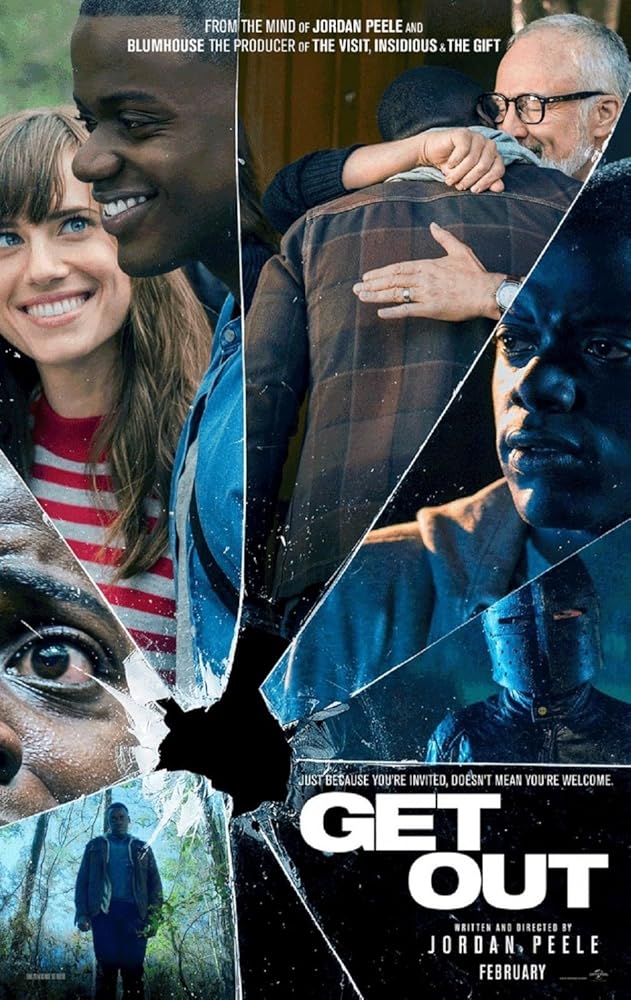
Jenny gives Jordan Peele's new film Get Out an enthusiastic 4 stars

A British doctor friend recounts the following frequent piece of dialogue when people meet him for the first time:
So where are you from?
Croydon, says Matthew
Yes but where are you from?
If he wants to tease them, he can keep this going for some time, knowing that the real question is, ‘You’ve got a brown skin, you sound middle class English but you look Asian so are you from Pakistan or India?’ The truth is that he really is ‘from’ Croydon, has never been to South Asia and the grandparents who came penniless to the UK from India via Uganda in the upheavals of the 1970s are long dead.

Image resultThis is the kind of unaware patronizing chat that the first half of Get Out explores with a uniquely sardonic eye. Chris, a successful photographer played superbly by the British actor Daniel Kaluuya, is on a meet-the-parents weekend with his girlfriend Rose (Allison Williams). ‘Do they know I’m black?’ he asks anxiously. ‘Oh no’, she says, telling him that her parents are so unracist that they would have voted for Obama for a third time, had that been possible. This trying terribly hard to show how colour blind you are is squirmily funny and maintained throughout a grisly party where the affluent and somewhat time-worn guests make graciously condescending references to Tiger Woods or, more gratingly, ask coy questions about the supposed sexual prowess of black men.

It is a long time since I have seen a film which so recklessly and confidently mashes up styles and genres. It is biting social satire, it is comedy – with a great turn from Lil Rey Howery as Chris’s best friend and dog-sitter. Then it becomes horror straight out of Rosemary’s Baby and The Stepford Wives though possibly not anything like shocking enough for the experienced horror movie-goer because there is always a lurking edge of hysterical laughter even in the most violent scenes.

What is not funny is the way the film reveals the crevasse of trauma that exists in race relations in the US. The wariness about crossing the racial divide in romantic relationships, the cultural appropriation, the lurking expectation of rejection, the impossibility on both sides of forgetting the shame of slavery – it’s all there.

Could such a film be made here? Probably not: the target is far too elusive where race is concerned. London is increasingly a city where a mixed racial heritage is barely worth anyone mentioning or even noticing. But underlying attitudes to cultural differences are alive and well. We just have our own specially British versions with ‘jokes’ about Polish plumbers, Spanish waiters and German bossiness. Our resentment and fear is better hidden but it’s there all right.

What Get Out explores is peculiarly American. Jordan Peele, who has a white mother and an African American father, says that he wrote the film to point out the hypocrisy of assuming that present day American is ‘post racial’. The real theme of its clammy horror and sly humour is visible in the faux-modesty of the parents’ house with its antebellum portico and strangely zombie-like black servants who are so amazingly loyal that they cannot leave.

It is a stroke of genius to cast Bradley Whitford as Rose’s unctuous neurosurgeon father, when despite his many other acting credits, BW is surely associated most with his role in The West Wing as a self-assured, clever, fast talking member of the privileged liberal elite. We are bound to think, ‘Ah, so that’s what all those politically correct people in the fantasy-perfect White House were really thinking!’ The film seems to ask, with perfect timing, ‘What if the Obama years were just an illusion?’ Despite the laughs, the director’s answer is clear: it was a hoax and now we can see the ugliness in American society that was there all along.


Saturday, 8 April 2017

Joe's shorts 2: Whose homeland?

What I’m thinking about Homeland in 200 words

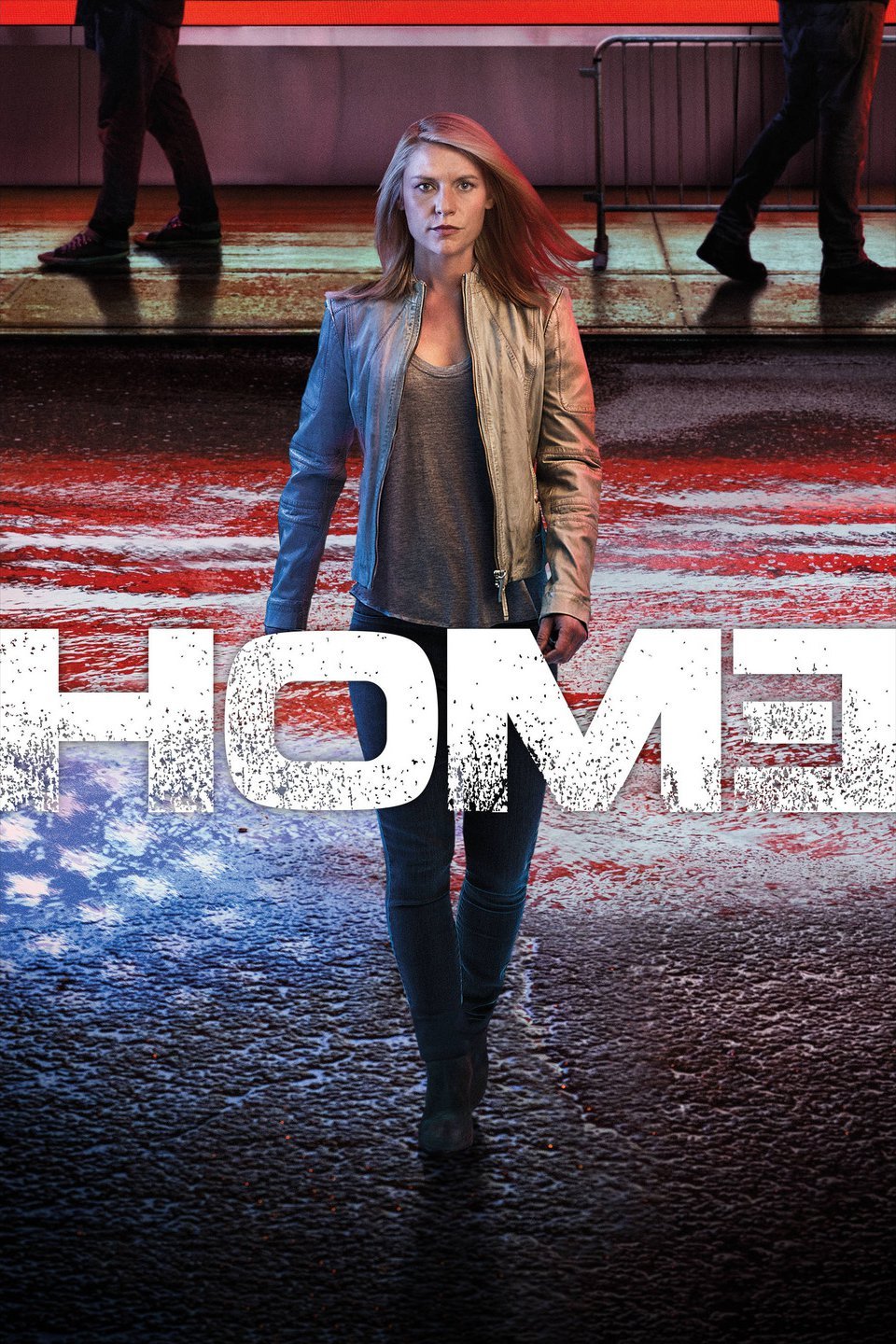
Image resultWhen the Showtime series was pranked in 2015 by artists who, asked to decorate the set with Arabic graffiti, sprayed satirical slogans about its racism, the show was busted on three levels. (1) It had all been about decent white Americans hunting nasty backward Muslims, the cost of freedom being Carrie’s manic vigilance. (2) Scary images of Arab backstreets and refugee camps were regularly served up as desolation porn to be enjoyed from the comfort of our Western couches. And (3) no one on the payroll spoke a word of Arabic.

Writers of series 6 seem to have been shamed into a re-think. Carrie, now no longer associated with the CIA, is reborn as a passionate advocate for Muslims wrongly suspected of terrorism. Her new pal, the President Elect, is like Clinton in being a trouser-suited female, but unlike Clinton in being so critical of America’s anti-Muslim wars abroad and police state tactics at home that the CIA are willing to commit homeland murders to destroy her. Meanwhile, with Carrie back on her meds, it’s up to the disabled CIA veteran Peter Quinn, now a prime CIA target, to keep us guessing whether his obsessive wild-eyed behaviour is paranoia or prescience.  


Thursday, 30 March 2017

Being a Reacher-Creature

Jenny confesses to a guilty pleasure

When I tell people that I have recently discovered and have become hopelessly addicted to Lee Child’s Jack Reacher novels, they cringe a little. What? Well, yes. I am hooked along with so many others. These books sell around 6 million copies a year. 
Make Me: (Jack Reacher 20) by [Child, Lee]
‘Lee Child’ is a fiction like his books. He was born Jim Grant in Coventry, lost his British TV job aged 40 and wrote his first book, Killing Floor, to immediate acclaim. He says he chose his pseudonym so that his books would appear on bookshop and library shelves before and near to Christie. Lee/Jim now lives in New York. Most readers would have no suspicion that he is not American. His syntax is entirely American English: people go to the hospital, things are gotten, people talk with others and use transportation.

Reacher is an ex-military cop and Lee/Jim has immersed himself in the intricacies of US Army uniforms, vocabulary, weaponry, language, systems and hierarchies. Yet for all his 21st century trappings, Reacher represents a familiar figure in storytelling. He is the knight errant of medieval tales, the lone ranger of cowboy films, the wildcard dysfunctional detective of TV drama: the classic outcast. He is at once preposterous and believable, a man who keeps his six foot five inch frame and impressive musculature in perfect shape despite getting no exercise and living exclusively on cheeseburgers and pie from greasy diners. He travels with a folding toothbrush as baggage, replaces his clothing from one dime store with more of the same by shoving the soiled clothing in the trash. More recently he has acquired a passport but he still has no home, no car, no money, no family. He hitchhikes. He does not carry a gun. He is a freelance vigilante looking for trouble and finding it. He never uses his first name and nor does anyone else.

Despite his long lineage in storytelling, the Reacher character is in some ways a modern figure. He has sex – and sorry, Lee/Jim but these are your least successful scenes and indeed a little embarrassing. The sex is with a companion figure, different in each book, a lone wolf like himself, a woman who is happy to have and be a great lover, though like him she avoids commitment and she is as independent, physically tough and ruthless as he is; a full partner in everything he does.

Night School: (Jack Reacher 21) by [Child, Lee]Reacher has magical powers of detection and problem solving, mostly implausible. In fact all of it is implausible. In real life Reacher’s cholesterol would be 12.5, he would be grossly fat and would be dead by 45. In real life any one of the hundreds of fights in which Reacher engages would end up with the hero arrested, in a wheelchair or dead. But this is thrillerland, so of course he always comes away with at the most a few bruises, or in one case, a broken nose.

What is it that is so very very satisfying about these books? First, they are revenge thrillers. Reacher dispenses rough justice, executing people without a qualm because they are obvious bad guys and the conventional system cannot deal with them. As readers we can discharge our own occasional thirst for violent revenge harmlessly by letting Reacher do it for us. The books are well written. There are no descriptions of lyrical landscape yet you get a keen sense of place, often of the flat expanse and tiny towns of all those fly-over states. The sentences are short, nouns have no overwrought adjectives attached to them. There is a lot of crisp dialogue. The plot moves along briskly and there is an unanticipatable twist at the end.

I believe that the real secret of their appeal is that these stories represent the universal fantasy about escape and a life without commitment. A life on the road, owning nothing, owing nothing, being untraceable, meeting nice people for mutually satisfying sex, delivering punishment for the unworthy without any fear of getting punished yourself: what’s not to like except perhaps that such a life is only for the emotionally immature?
I am in good company in my adoration. Worthy writers such as Margaret Drabble, Philip Pullman, Michael Holroyd and Frederick Forsyth have all expressed fulsome admiration for these books. Now I’m just off to the Oxfam bookshop to see if one of those lovely reviewers, ten a penny in Islington, has got round to donating their hardback copy of Lee/Jim’s latest book, Night School, because I can’t wait for the paperback to appear next month.

Wednesday, 22 March 2017

Joe's shorts 1: nuns & buns

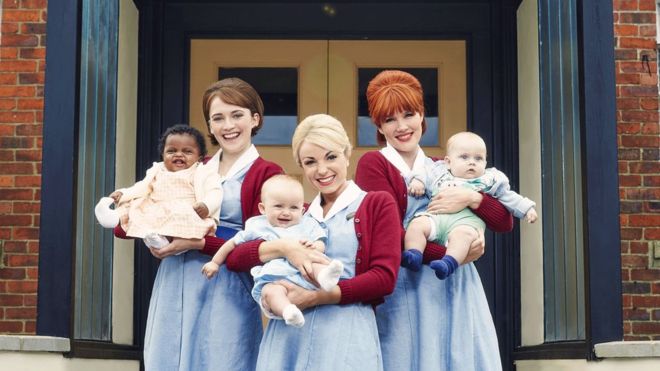
What I'm thinking about Call the Midwife in 200 words

Yes, of course it’s a sugary concoction. And yes, its relentless subtext is that love conquers all. And yes, attitudes on race and class and, even sexual preference, are anachronistically adjusted so that those in the inner circle of huggable characters are not allowed to agitate us with archaic prejudices.

Call the Midwife

And yet it earns a far lower tosh-rating than the late unlamented Downton Abbey. At least it doesn’t promote the dangerous myth that illness among the working classes was once taken care of by benevolent aristocrats. It consistently credits the NHS with transforming healthcare for the poor, while not glossing over other unsolved problems of poverty.  And whereas Downton went through the Great War with only one life-changing injury, which turned out to be not so life-changing when the handsome paraplegic discovered he was only bruised and could walk after all, Call the Midwife has taken a straight look at babies effected by thalidomide, birth problems resulting from FGM, and mouthfuls of rotting teeth.  

It has also made space in its casting for actors with Downs Syndrome and, though the nuns and midwives are white, regularly employs actors of colour to portray ordinary law-abiding mothers and fathers in functional relationships.  

Friday, 25 November 2016

Big budgets: nice but unnecessary

45 Years and All the Way set Joe thinking about the indie advantage

There’s no such thing as a low budget novel. There are genres that flourish at the margins, such as fanzine fiction, but most writers, even those published by major imprints, are essentially indie operators. There is certainly no obvious correlation between money and quality. Sentences can’t benefit from high production values.

Films are different. To shoot a film some outlay is required in addition to food and lodging for the auteur. There are kinds of quality that cost money. Which is why I’ve always had mixed feelings about independent low budget movies. On the one hand they’re less likely to be corrupted by the corporate imperative to maximise profits. On the other, they’re more likely to be spoilt for a ha’p’orth of tar.   
    
Flying to LA for Thanksgiving with my California in-laws I had plenty of time to think about this while I caught up on new releases.  

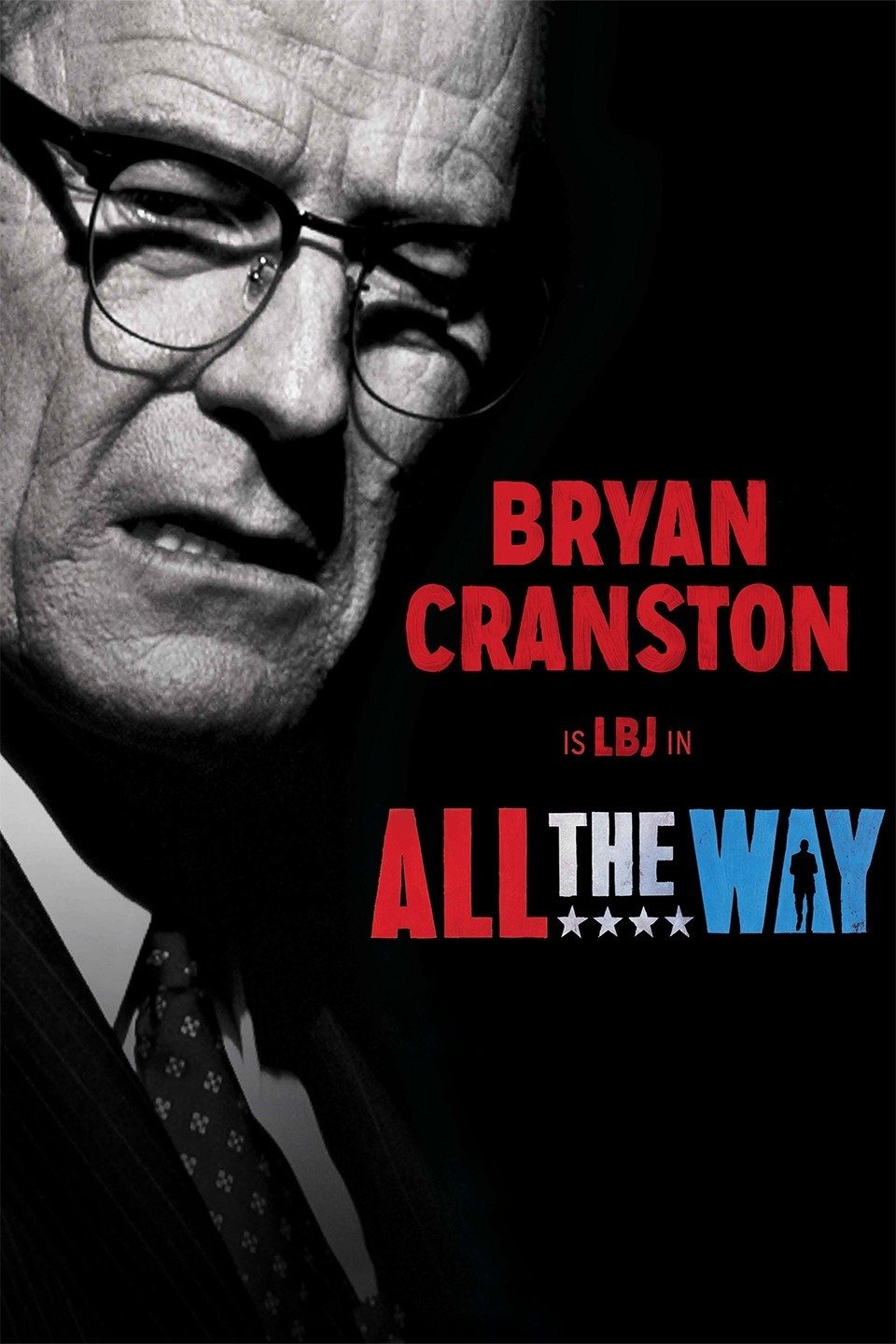
Image resultAll the Way covers Lyndon Johnson’s first year in office, from his sudden elevation to the Presidency after JFK’s assassination to his victory in the 1964 Election. Huge historic changes are in progress as Johnson manoeuvres to get Kennedy’s Civil Rights bill through Congress, even at the cost of alienating Southern Democrats. Bryan Cranston, who came to fame as the drug-dealing chemistry teacher in Breaking Bad, gives a superb performance as LBJ, confronting us with a paradoxical figure – often crude, sometimes bullying, but capable of great charm and driven by a genuine urge to reduce poverty and oppression in America.

I watched with enjoyment and admiration, but remained emotionally unengaged. HBO and producer Stephen Spielberg haven’t stinted on sets and locations. The research was thorough. Adapted from a play, the script is sound, if a bit too earnestly instructional at times. There’s fun to be had, particularly in the relationship between LBJ and his running mate, Hubert Humphrey, played by a heavily disguised Bradley Whitfield. The hapless Humph has a moment of panic when Johnson pretends to lose control of his car and drives it into a lake. It’s only then that we discover it’s amphibious. That’s the kind of thing you can do with a decent budget.

Image resultAndrew Haigh’s 45 Years covers six days in the life of a married couple in their seventies, who are about to celebrate their anniversary. Retired and childless, Kate and Geoff have settled into quiet companionable domesticity. For a while I feared the drama would remain as flat as the Norfolk landscape in which the couple live, with the dialogue sticking so close to the mundane rhythms of ordinary life. But Charlotte Rampling and Tom Courtenay bring a mesmerising intensity to their apparently effortless performances. A letter from Switzerland tells Geoff that the body of an old girlfriend has come to light. He was travelling with Katya in the early 60s when she fell into a crevasse; melting snows have revealed her 26-year-old body perfectly preserved under the ice.

The letter, written in German, sends Geoff and Kate into the garage in search of his old German dictionary. The film is punctuated by these encounters with old possessions, first in the garage, later in the attic, first together, then separately as the strains on their relationship begin to show. Katya was dead before Kate met Geoff, but a dead lover who has never suffered the ravages of aging is hard to compete with.

At the heart of the film is a sequence in which Kate, having found Geoff’s slides of his 60s travels and set up an old projector in the attic, clicks through images of Katya, first small in the landscape, then in close-up. We see the two women side by side, Kate staring intently at the screen, Katya looking at the unseen photographer. Visually beautiful, this series of images delivers a narrative jolt sharper than anything in All the Way, though in Hollywood terms it cost nothing. 

Accepting another gin and tonic off the steward’s trolley, I concluded that, in this pairing at least, the indie film had all the advantages.

Tuesday, 22 November 2016

Cat crazy North Londoners will love this one

Jenny gives A Street Cat Named Bob 4 whimsical stars

Full disclosure: first, I have been a dedicated cat woman all my life and have twice owned ginger tomcats. Secondly, before he was famous I actually touched the sacred fur of the real life Street Cat Bob. He was travelling, as I was, on the number 38 bus towards Hackney at the time and on the shoulder of his owner.  Bob graciously allowed me to administer a few cheek-rubs. Thirdly, I live in Islington, North London.
Image result

This film, directed by Roger Spottiswoode, is based on the book of the same name by James Bowen (played here by Luke Treadaway) a formerly homeless man and a former heroin addict. It’s a simple story of redemption: man has sad upbringing, turns to drugs and to fund the drugs starts busking in Covent Garden and Islington. Since he can’t sing he exists by searching skips for abandoned food and lying to his social worker about how he is going to get clean any time soon. Then one day, placed out of the kindness of this social worker’s heart in a scruffy flat in Hackney, a saviour appears. Yes, it’s Bob the street cat. Bob knows that even the most hopeless sinner can be saved and he refuses to leave, following James as he departs on yet another hopeless mission to earn a few pennies as a busker. Bob is soon drawing admiring attention perching cutely on his owner’s shoulder, walking on a lead, wearing hand knitted stripey scarves made by fans  – and attracting a lot more money –  plus the promise of a book. I hope it’s not too much of a spoiler to say that James and Bob don’t live in a grubby flat in Hackney any more.

Along with the rest of the small audience at the Islington Vue, I oohed and aahed excitedly as I recognized every single exterior location: oh look there’s that funny bit of the Canal where it turns slightly west! That’s the Angel tube station! The plot is skimpy, though as a cat owner who has many times temporarily and in one case permanently mislaid a beloved pet, I quailed in terror at the sequence where Bob goes missing and the depiction of coming off methadone is certainly gripping. This is more than I can say for the notional romance with a neighbour.  The film also faithfully conveys, though maybe not on purpose, the way that addicts so often have someone else to blame: it was my Dad’s fault, it was those evil drug dealers, it was that badly behaved bulldog with the nasty owner.

This is a low budget movie with a terrible script and with characters cut out of the flimsiest cardboard, giving the cast nothing whatsoever to work with. It’s a YouTube cat video extended to 103 minutes. Every scene has slightly too much lighting - even at its best, Islington never has quite that tanning-booth-orange glow. Foreign viewers will be reassured to see the familiar giant clues that we are in London: big red buses, Trafalgar Square, House of Parliament.

Plaudits must go to the four cat trainers and the six stand-ins for Bob, some more convincing than others, as well as to the real hero, Bob The Magnificat, who appears as himself. You will never see a film with so many adorable cat close-ups, with such convincing cat noises on the soundtrack or with so many shots taken from a cat POV.

I loved it. 

But to be completely honest, to enjoy it, you would need to be a crazy cat person and to live in North London. If you do not meet these criteria I recommend that you give this one a miss.